What is a VPS Server Cloud and How Does it Work?
In recent years, the adoption of cloud computing has surged. According to a 2021 report by Gartner, the global cloud services market is projected to reach $482 billion by 2022. Among these services, the "vps server cloud" has gained significant attention. Businesses are increasingly turning to Virtual Private Servers (VPS) due to their flexibility and cost-effectiveness.
A VPS server cloud provides dedicated resources within a shared environment. This can lead to improved performance compared to traditional shared hosting options. However, potential users should be aware of challenges. Issues such as management complexity and potential security vulnerabilities may arise if not addressed properly. Industry studies suggest that nearly 70% of users face difficulties when transitioning to cloud solutions.
Reliability is vital when choosing a VPS server cloud. According to research by Statista, 94% of businesses saw improvements in their uptime when utilizing cloud technology. Yet, it is crucial to select a reputable provider to ensure optimal performance and support. As the market grows, understanding the implications of VPS technology becomes increasingly important for businesses aiming to thrive in a digital landscape.

What is a VPS Server Cloud?
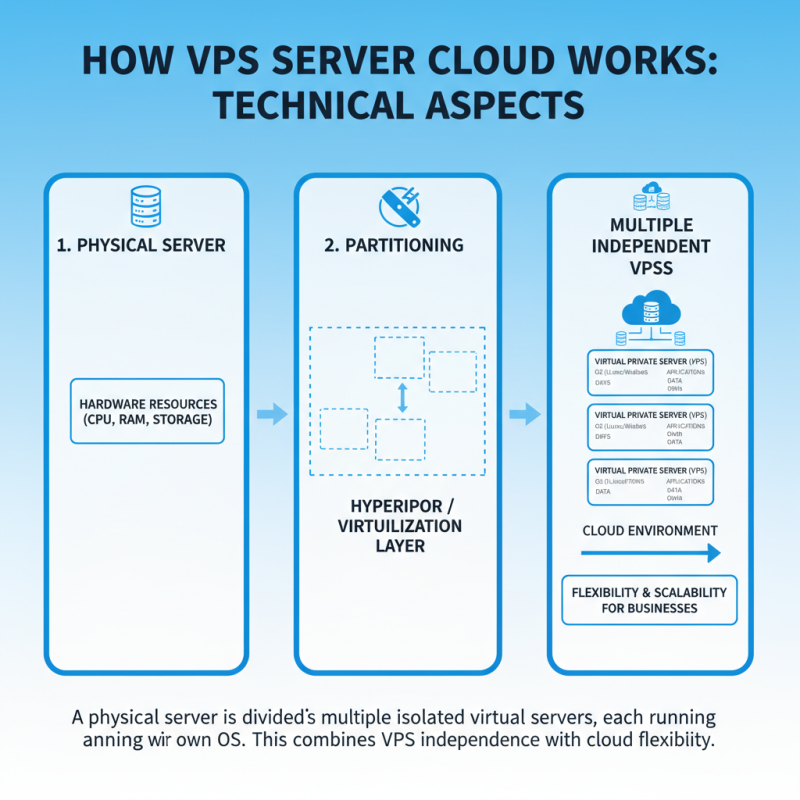
A VPS Server Cloud combines the concepts of virtual private servers and cloud computing. It offers users a dedicated server experience within a cloud infrastructure. This means you get your own resources—CPU, RAM, and storage—separate from others. It's like having a mini-server that adapts to your needs. This flexibility is one of its main advantages.
When you use a VPS Server Cloud, you enjoy scalability. You can easily adjust your resources based on demand. This can be particularly useful for growing businesses that may need more power during peak times. However, while it offers many benefits, setup and management can be complex for some users. There’s also a learning curve involved.
Security is another important aspect. VPS servers provide a higher level of security compared to shared hosting. However, it's crucial to understand that it's not foolproof. Users need to implement their own security measures. Frequent updates and backups are necessary to protect your data. Overall, a VPS server cloud presents both opportunities and challenges in the digital landscape.
VPS Server Cloud Usage Statistics
Key Features and Benefits of VPS Server Cloud
A VPS (Virtual Private Server) Cloud offers a blend of flexibility and control. It provides dedicated resources in a virtual environment. This means you can install your operating system and software without restrictions. The isolation from other users enhances security and performance.
The benefits of a VPS Cloud are numerous. It allows scalability, meaning you can easily adjust resources based on your needs. When traffic spikes, a VPS can handle increased demand. This adaptability is crucial for growing businesses. Additionally, it typically offers better performance than shared hosting.
Tips: Always monitor your resource usage. Underutilized resources can be a waste. Consider scheduling regular performance reviews to ensure your server meets your demands. Evaluate your configurations. Sometimes, less is more. Make adjustments as necessary to optimize your environment. With a bit of tinkering, you can achieve great efficiency.
Comparing VPS Server Cloud with Traditional Hosting Solutions
When comparing VPS server cloud solutions with traditional hosting, it’s crucial to understand their distinct characteristics. VPS, or Virtual Private Server, allows users to have dedicated resources within a shared environment. This ensures better performance than traditional shared hosting, which often leads to slower load times and downtime. With VPS, each server operates independently, minimizing the impact of neighboring sites on your performance.
Traditional hosting solutions often limit scalability. Upgrading resources can mean significant downtime or even a complete migration to another server. In contrast, VPS provides flexibility. Users can adjust their resources in real-time based on their needs. However, this inherent complexity can make management challenging for those unfamiliar with server configurations.
The cost structures can differ widely as well. Traditional hosting might appear cheaper initially but can accrue hidden costs as traffic increases. VPS offers transparent pricing, but the overall cost can rise quickly with increased demand. Users should carefully analyze their requirements to choose the best solution. In the end, the decision hinges on the unique needs of each individual or business.
Use Cases for VPS Server Cloud in Various Industries
VPS server clouds have become a game-changer across multiple industries. They provide businesses with scalable resources and high performance at a lower cost compared to traditional hosting. A report by Market Research Future predicts that the VPS hosting market will grow at a compound annual growth rate of 15% through 2025. This growth reflects a rising demand for enhanced flexibility and resource management.
In the e-commerce sector, companies are leveraging VPS server clouds to handle traffic spikes during peak shopping seasons. The increased uptime provided by these servers ensures that online stores remain operational, even under heavy loads. This can directly impact sales, with studies showing that 47% of consumers expect web pages to load in under two seconds. A sluggish site means lost revenue.
The healthcare industry is also seeing benefits. Institutions utilize VPS clouds to securely store and share sensitive patient information. However, challenges remain. Data breaches still occur, and the need for compliance with regulations like HIPAA is crucial. According to a 2021 report from the Ponemon Institute, 83% of healthcare organizations experienced a data breach in the past two years. The reliance on VPS cloud solutions must balance efficiency with security and regulatory requirements.
What is a VPS Server Cloud and How Does it Work? - Use Cases for VPS Server Cloud in Various Industries
| Industry |
Use Case |
Benefits |
| E-commerce |
Online Store Hosting |
Scalability, data security, and improved performance |
| Healthcare |
Patient Management Systems |
Data privacy, compliance with regulations, and remote access |
| Finance |
Trading Applications |
High availability, low latency, and data security |
| Education |
E-learning Platforms |
Cost-effectiveness, scalability, and user management |
| Information Technology |
Software Development and Testing |
Environment customization, resource efficiency, and rapid deployment |